
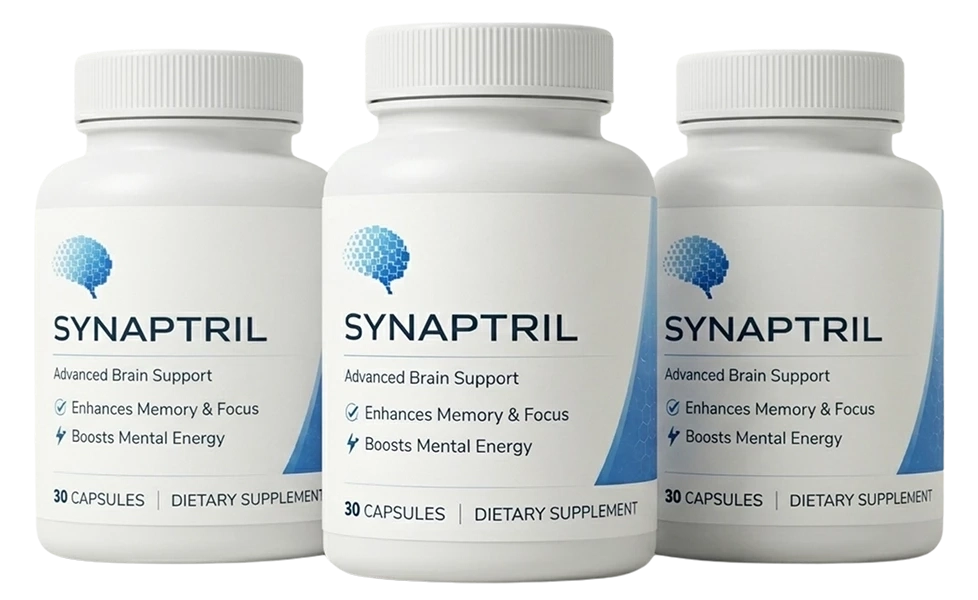
Synaptril is strongest on convenience and ingredient variety. Fully disclosed alternatives can be stronger for dose comparison, while simpler products may be easier to evaluate for safety and value.
Synaptril vs alternatives: the essential facts
Synaptril is sold in the United States as a dietary supplement for adults. The bottle contains 30 capsules and the suggested use is one capsule daily. The label declares 80 mg magnesium, equal to 19% of the Daily Value, followed by a 575 mg proprietary blend. That blend names magnesium glycinate, alpha lipoic acid, butcher's broom root extract, L-carnitine, turmeric rhizome extract standardized to 95% curcuminoids, and coenzyme Q10 as ubiquinone.
The official offer presents two bottles for $178 plus shipping, three bottles for $216 with free US shipping, and six bottles for $294 with free US shipping. These totals equal advertised unit prices of $89, $72, and $49 per bottle. The seller also advertises a 60-day satisfaction guarantee. Prices and terms can change, so the checkout remains the final source for the exact transaction.
The practical purpose of this page is to help you make a fair side-by-side comparison without rewarding marketing volume. It does not assume that a recognizable ingredient list proves a personal result. It also does not assume that every criticism makes the product a poor choice. The useful answer sits in the details, particularly dose transparency, safety, total cost, expectations, and the steps you can take before ordering.
Compare the same goal
A caffeine-based focus product, a magnesium supplement, and a multi-ingredient memory formula solve different problems. Comparing them as if they are interchangeable creates a false winner.
This part of the Synaptril vs alternatives question matters because a label fact and a personal result are not the same thing. A caffeine-based focus product, a magnesium supplement, and a multi-ingredient memory formula solve different problems. Comparing them as if they are interchangeable creates a false winner. The information gives you a useful starting point, but it cannot predict how your body, schedule, medicines, sleep, diet, or expectations will affect the experience. Strong decisions come from combining the confirmed product detail with your own circumstances. That is more reliable than accepting a claim simply because it sounds scientific or appears beside a polished product image.
Put compare the same goal into a practical buying test. Ask what is known, what remains uncertain, and whether the uncertainty changes the decision for you. Write down your primary goal before opening product pages. If you cannot answer an important safety, price, or policy question, waiting is sensible. Synaptril is an optional supplement, so there is no reason to rush past a concern that could be checked before an order is placed.
Write down your primary goal before opening product pages.
Label transparency
Synaptril discloses 80 mg magnesium and a 575 mg blend but not most individual amounts. Some alternatives list every dose separately.
A common mistake is to judge label transparency in isolation. Synaptril discloses 80 mg magnesium and a 575 mg blend but not most individual amounts. Some alternatives list every dose separately. The better approach is to place that information beside the serving size, the proprietary blend, your expected length of use, and the total USD cost. Each part changes the meaning of the others. A convenient capsule may still be poor value for someone who dislikes undisclosed doses, while a larger discount may be irrelevant to a first-time buyer who wants to limit commitment.
Keep the decision personal and measurable. Choose full disclosure when exact research matching or ingredient control is important to you. Write down the exact reason this point matters to you and the evidence you would need to feel comfortable. This prevents a dramatic headline, an anonymous testimonial, or a best-value badge from doing all the thinking. It also makes it easier to compare Synaptril with another product using the same standards rather than moving the goalposts for whichever page looks more persuasive.
Choose full disclosure when exact research matching or ingredient control is important to you.
Ingredient count
Synaptril names seven featured components across its magnesium listing and blend. A competitor may contain more or fewer.
The useful distinction here is between possibility and proof. Synaptril names seven featured components across its magnesium listing and blend. A competitor may contain more or fewer. An ingredient or policy can make the offer more interesting without proving that the finished product will deliver a specific outcome. That distinction is especially important with brain and memory supplements because day-to-day concentration changes for many reasons. Stress, sleep, hydration, caffeine, mood, illness, and workload can all influence the same feelings that marketing describes as product benefits.
Use a cautious standard before turning this information into a purchase. Count only ingredients that are relevant, suitably dosed, safe for you, and supported for the intended use. If you decide to try Synaptril, keep the rest of your routine reasonably stable and note meaningful changes at fixed intervals. Do not search for a sign every hour or judge the entire bottle from one unusually good or bad day. A repeatable pattern is more useful than a fleeting impression, although even a pattern does not prove cause and effect.
Count only ingredients that are relevant, suitably dosed, safe for you, and supported for the intended use.
Stimulant versus non-stimulant formulas
Synaptril's visible label does not list caffeine. Other focus products may use caffeine for a noticeable alertness effect that can also affect sleep, anxiety, or heart rate.
For US buyers, stimulant versus non-stimulant formulas should be considered alongside the product's status as a dietary supplement. Synaptril's visible label does not list caffeine. Other focus products may use caffeine for a noticeable alertness effect that can also affect sleep, anxiety, or heart rate. Dietary supplements are not approved by the FDA for effectiveness before sale in the same way as prescription drugs. A professional-looking label, a familiar ingredient, or a guarantee does not change that regulatory distinction. It remains the buyer's job to check suitability and the seller's current terms.
The safest next step is simple. Decide whether you want stimulant effects before comparing claims. Keep a copy of any information that affects your order, including the final price and refund wording. For health questions, take the full label to a pharmacist or clinician rather than describing the product from memory. That allows the professional to see every listed component and avoids missing a possible overlap with medicine, another supplement, or a medical condition.
Decide whether you want stimulant effects before comparing claims.
Single ingredient alternatives
A single-ingredient product can be easier to dose, evaluate, and check for interactions. It may also address a narrower need.
Value is not only the amount charged to a card. A single-ingredient product can be easier to dose, evaluate, and check for interactions. It may also address a narrower need. Real value includes usefulness, tolerance, transparency, convenience, shipping, and the chance that part of a multi-bottle order may go unused. The lowest unit price is valuable only when the product suits the buyer and the full supply is likely to be used. This is why a smaller package can sometimes be the wiser first purchase even though its daily cost is higher.
Treat single ingredient alternatives as one line in a short decision sheet. Simplicity can be an advantage when you want to know exactly what you are testing. Give the point a simple score from one to five, then apply the same method to safety, evidence, label clarity, and affordability. A balanced score will not create certainty, but it exposes the exact trade-off. That is far more helpful than calling the product perfect or useless when the available facts support a more measured conclusion.
Simplicity can be an advantage when you want to know exactly what you are testing.
Evidence quality
Look for studies on the finished formula, disclosed doses, relevant outcomes, and people similar to the intended user. Ingredient citations alone are weaker.
This part of the Synaptril vs alternatives question matters because a label fact and a personal result are not the same thing. Look for studies on the finished formula, disclosed doses, relevant outcomes, and people similar to the intended user. Ingredient citations alone are weaker. The information gives you a useful starting point, but it cannot predict how your body, schedule, medicines, sleep, diet, or expectations will affect the experience. Strong decisions come from combining the confirmed product detail with your own circumstances. That is more reliable than accepting a claim simply because it sounds scientific or appears beside a polished product image.
Put evidence quality into a practical buying test. Ask what is known, what remains uncertain, and whether the uncertainty changes the decision for you. Do not count the number of scientific links without checking what they actually studied. If you cannot answer an important safety, price, or policy question, waiting is sensible. Synaptril is an optional supplement, so there is no reason to rush past a concern that could be checked before an order is placed.
Do not count the number of scientific links without checking what they actually studied.
Daily and upfront cost
Synaptril's advertised daily product cost ranges from about $1.63 to $2.97 depending on package. Alternatives can look cheaper but use a different serving size.
A common mistake is to judge daily and upfront cost in isolation. Synaptril's advertised daily product cost ranges from about $1.63 to $2.97 depending on package. Alternatives can look cheaper but use a different serving size. The better approach is to place that information beside the serving size, the proprietary blend, your expected length of use, and the total USD cost. Each part changes the meaning of the others. A convenient capsule may still be poor value for someone who dislikes undisclosed doses, while a larger discount may be irrelevant to a first-time buyer who wants to limit commitment.
Keep the decision personal and measurable. Compare cost per labeled day and total checkout, including shipping. Write down the exact reason this point matters to you and the evidence you would need to feel comfortable. This prevents a dramatic headline, an anonymous testimonial, or a best-value badge from doing all the thinking. It also makes it easier to compare Synaptril with another product using the same standards rather than moving the goalposts for whichever page looks more persuasive.
Compare cost per labeled day and total checkout, including shipping.
Guarantee comparison
Synaptril advertises 60 days. Other sellers may offer shorter, longer, or more restrictive policies.
The useful distinction here is between possibility and proof. Synaptril advertises 60 days. Other sellers may offer shorter, longer, or more restrictive policies. An ingredient or policy can make the offer more interesting without proving that the finished product will deliver a specific outcome. That distinction is especially important with brain and memory supplements because day-to-day concentration changes for many reasons. Stress, sleep, hydration, caffeine, mood, illness, and workload can all influence the same feelings that marketing describes as product benefits.
Use a cautious standard before turning this information into a purchase. Read return conditions and ask whether opened and unopened bottles are covered. If you decide to try Synaptril, keep the rest of your routine reasonably stable and note meaningful changes at fixed intervals. Do not search for a sign every hour or judge the entire bottle from one unusually good or bad day. A repeatable pattern is more useful than a fleeting impression, although even a pattern does not prove cause and effect.
Read return conditions and ask whether opened and unopened bottles are covered.
Safety and interactions
A broader formula creates more possible interaction questions than a simple formula, though risk depends on the actual ingredients and user.
For US buyers, safety and interactions should be considered alongside the product's status as a dietary supplement. A broader formula creates more possible interaction questions than a simple formula, though risk depends on the actual ingredients and user. Dietary supplements are not approved by the FDA for effectiveness before sale in the same way as prescription drugs. A professional-looking label, a familiar ingredient, or a guarantee does not change that regulatory distinction. It remains the buyer's job to check suitability and the seller's current terms.
The safest next step is simple. Have a pharmacist compare the two full labels, not just the front claims. Keep a copy of any information that affects your order, including the final price and refund wording. For health questions, take the full label to a pharmacist or clinician rather than describing the product from memory. That allows the professional to see every listed component and avoids missing a possible overlap with medicine, another supplement, or a medical condition.
Have a pharmacist compare the two full labels, not just the front claims.
How to choose a winner
The best option is the one that meets your goal with acceptable evidence, transparency, cost, safety, and convenience. It may also be the decision not to use a supplement.
Value is not only the amount charged to a card. The best option is the one that meets your goal with acceptable evidence, transparency, cost, safety, and convenience. It may also be the decision not to use a supplement. Real value includes usefulness, tolerance, transparency, convenience, shipping, and the chance that part of a multi-bottle order may go unused. The lowest unit price is valuable only when the product suits the buyer and the full supply is likely to be used. This is why a smaller package can sometimes be the wiser first purchase even though its daily cost is higher.
Treat how to choose a winner as one line in a short decision sheet. Score each category before looking at promotional badges or testimonials. Give the point a simple score from one to five, then apply the same method to safety, evidence, label clarity, and affordability. A balanced score will not create certainty, but it exposes the exact trade-off. That is far more helpful than calling the product perfect or useless when the available facts support a more measured conclusion.
Score each category before looking at promotional badges or testimonials.
A six-step Synaptril decision plan
- Define your goal. Name the specific reason you are considering Synaptril. Better focus during reading is clearer than a general desire for a sharper brain.
- Check the label. Read the serving size, magnesium amount, full proprietary blend, other ingredients, directions, and warnings.
- Clear safety questions. Ask a pharmacist or clinician about medicine use, health conditions, procedures, pregnancy, nursing, allergies, and duplicate supplements.
- Compare real costs. Use the total USD checkout, daily cost, shipping, expected use, and refund conditions. Do not compare headline numbers alone.
- Save the terms. Keep the order confirmation, current guarantee wording, support details, tracking information, and containers.
- Review honestly. If you try it, use the label direction, track a small number of meaningful outcomes, and stop if you feel unwell or find no worthwhile value.
Questions to ask before clicking buy
Can you explain exactly why you want this product? Have you checked every ingredient against your current medicines and supplements? Are you comfortable with a proprietary blend that does not disclose most individual amounts? Which package can you afford without depending on a refund? Do you understand the 60-day deadline and return steps? Would a simpler or more transparent alternative fit your goal better? If any answer is unclear, the purchase is not ready.
There is no prize for making a fast supplement decision. A trustworthy offer should survive careful reading. Use the official page to confirm current details, then close it and think if the sales design is creating pressure. Returning later with a clear head often reveals whether you want the product itself or simply reacted to a discount, countdown, testimonial, or fear-based claim.
QUICK ANSWERS
Frequently asked questions
What is Synaptril's main advantage?+
A convenient one-capsule routine with several recognizable ingredients. This answer is general information and cannot replace advice based on your own health and medicines.
What is its main disadvantage?+
Most individual doses inside the proprietary blend are not disclosed. This answer is general information and cannot replace advice based on your own health and medicines.
Should I choose the formula with more ingredients?+
Not automatically. Relevance, dose, evidence, and safety matter more. This answer is general information and cannot replace advice based on your own health and medicines.
Does Synaptril contain caffeine?+
Caffeine is not listed on the visible label reviewed. This answer is general information and cannot replace advice based on your own health and medicines.
How should prices be compared?+
Use cost per labeled day, total checkout, shipping, and expected use. This answer is general information and cannot replace advice based on your own health and medicines.
Can an alternative be better for me?+
Yes. Suitability depends on your goal, health, medicines, budget, and transparency preference. This answer is general information and cannot replace advice based on your own health and medicines.
Sources and review standards
This guide uses the Synaptril label and seller materials available in August 2026, plus general dietary-supplement guidance from US public health sources. Promotional claims are described as claims rather than established medical outcomes. No product-specific clinical trial was presented on the official offer reviewed. We do not invent customer experiences or medical endorsements.